CHEMPOINT
Replacing a rep-dependent phone sales process with a self-service platform for B2B buyers in a regulated, high-stakes industry.

The Problem
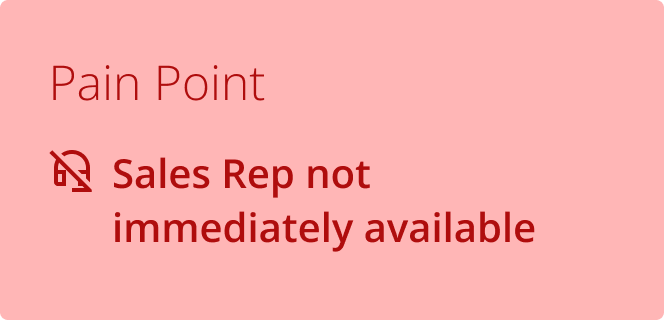
Every order went through a human
CHEMPOINT’s entire ordering process ran through its sales reps. Procurement managers would call or email a rep, describe what they needed, and wait. The rep acted as the interface between customer and product catalog, a necessary intermediary in an industry where mistakes aren't just inconvenient, they're dangerous.
The business wanted to change this; the goal was a self-service platform that would let buyers independently search, request quotes for products, and place orders for already quoted products (a part of the regulated industry we couldn’t get around). Reducing rep workload, accelerating order velocity, and meeting the growing expectation from B2B buyers for digital-first purchasing.
Inherited Brief & Stakeholder Alignment
Starting with an existing brief and spending time with executive, product, and sales stakeholders to align goals and assumptions. Defining what success looked like before touching a wireframe.
Information Architecture & User Flows
Mapping the full ordering journey, from product discovery through checkout. Accounting for regulated product quote workflow and compliance documentation requirements. Identifying the moments of highest friction and risk.
Concept Development & Wireframing
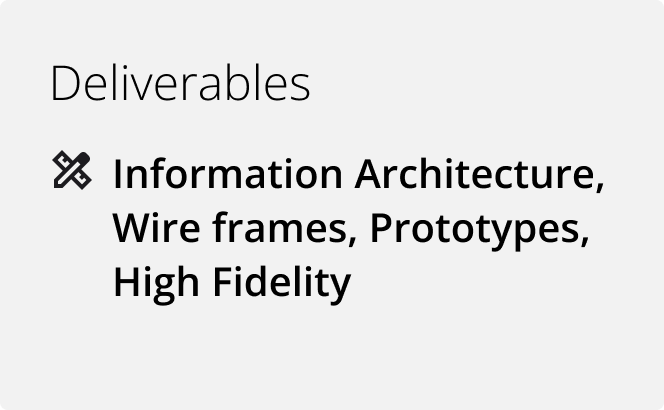
Generating multiple structural concepts for the core purchase flow, presenting options to stakeholders with a clear rationale for each. Using low-fidelity wireframes for heuristic evaluation and logic before investing in visual design.
Prototyping & Stakeholder Testing
Building multiple interactive prototypes to validate the core ordering flow with internal stakeholders and sales reps acting as user proxies. Using feedback cycles to refine the guided purchase experience and compliance touch-points.
High-Fidelity Design & Handoff
Delivering production-ready designs for desktop and mobile, with detailed component specifications, interaction notes, and documented design rationale; establishing handoff standards that the engineering team could follow consistently.
Launch Support & Review Cadence
Partnering with engineering through build and QA, flagging implementation issues against design intent. Establishing a recurring design review cadence that continued post-launch, the first structured design process the organization had ever run.
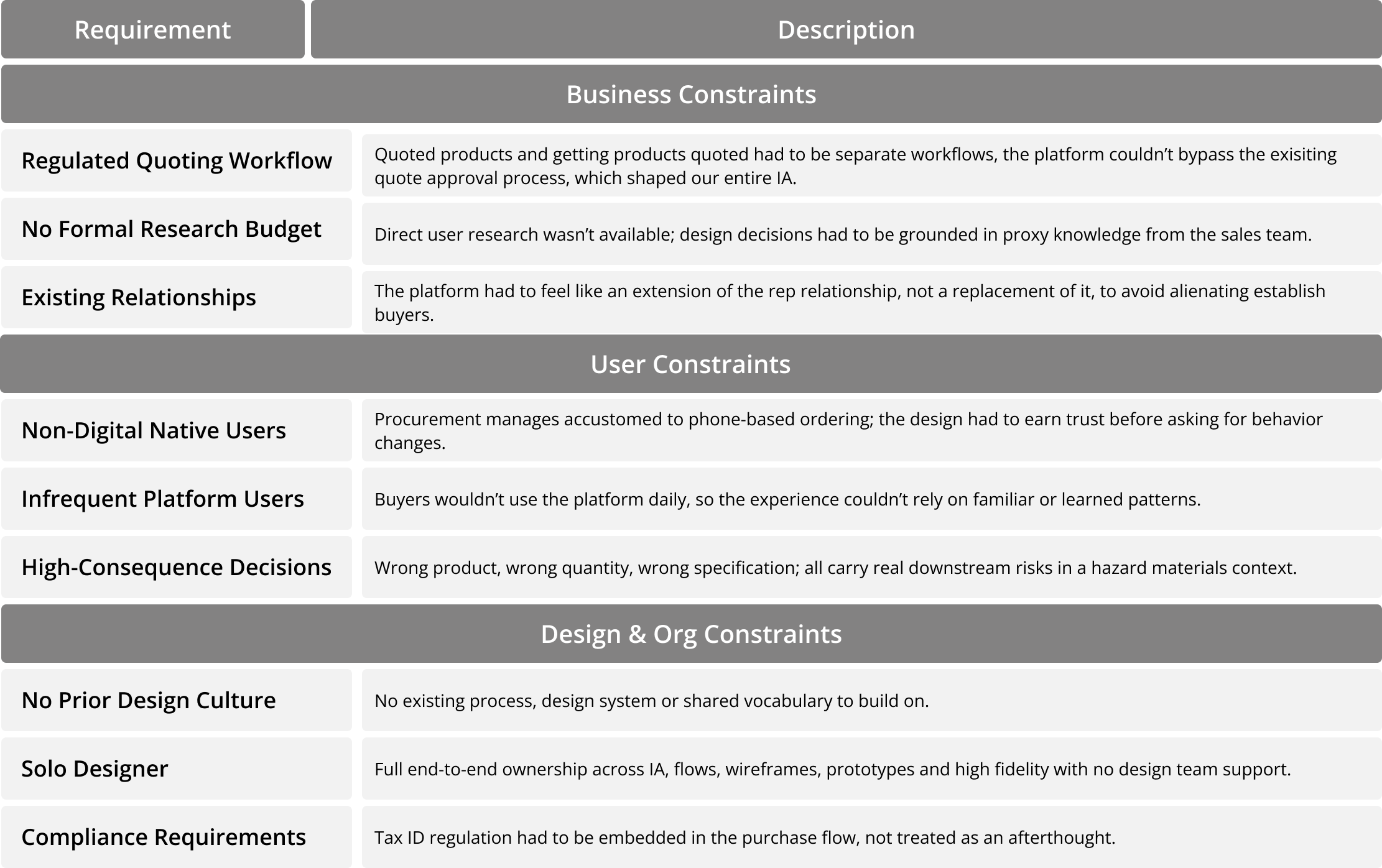
Project Constraints
Before

After

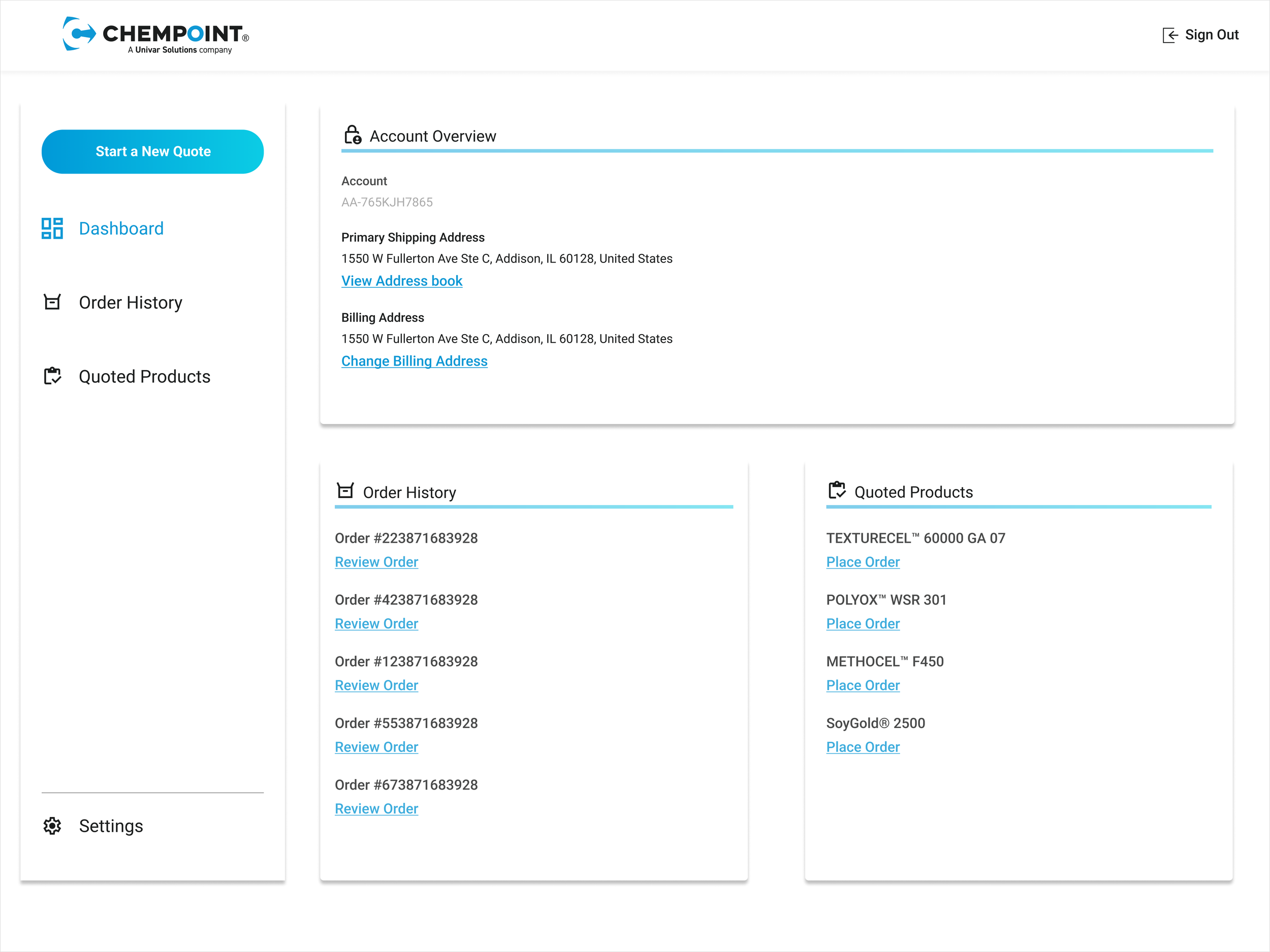
Account Dashboard
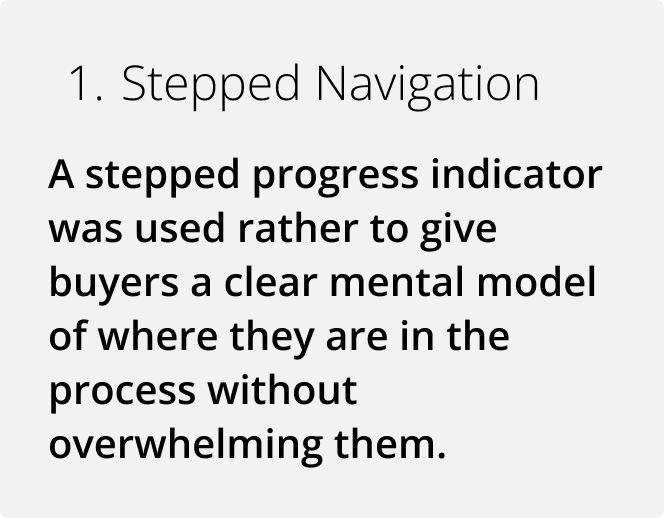
The dashboard had to do three things at once: reduce the learning curve for infrequent users, surface everything a buyer needs to act quickly, and make committing to an order feel safe. Every element on this screen exists to serve one of those jobs.
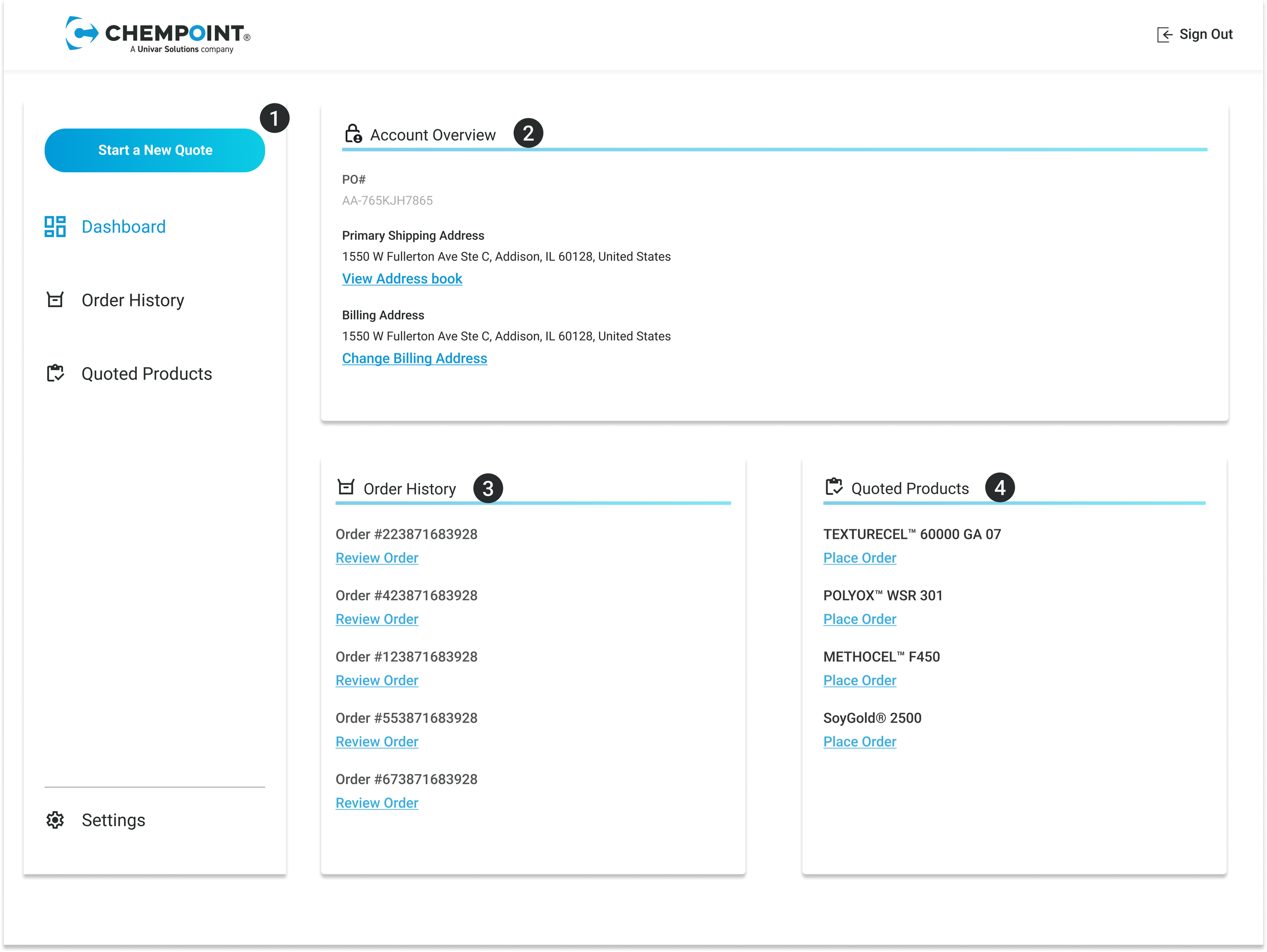
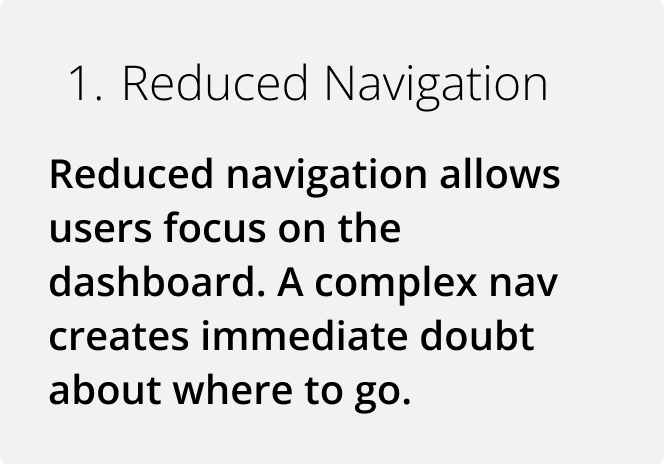
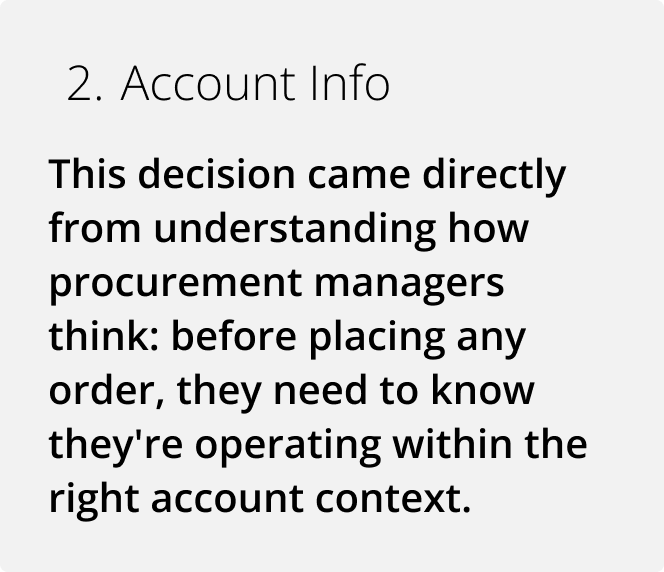
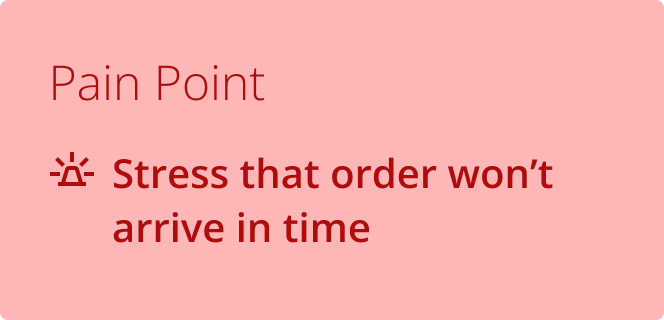
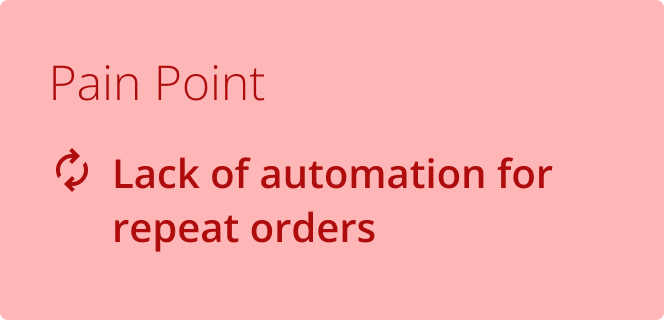
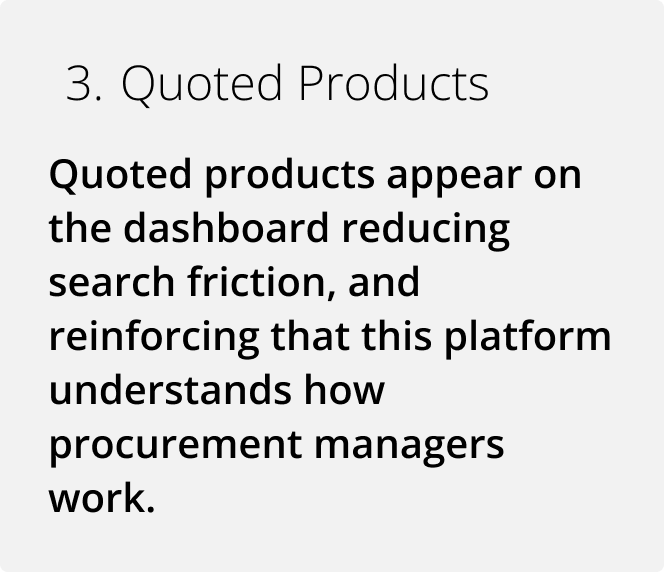
These four elements weren't designed independently; they were designed in response to a single insight: procurement managers don't browse; they execute. Every element on this screen removes a step between arriving and acting with confidence.
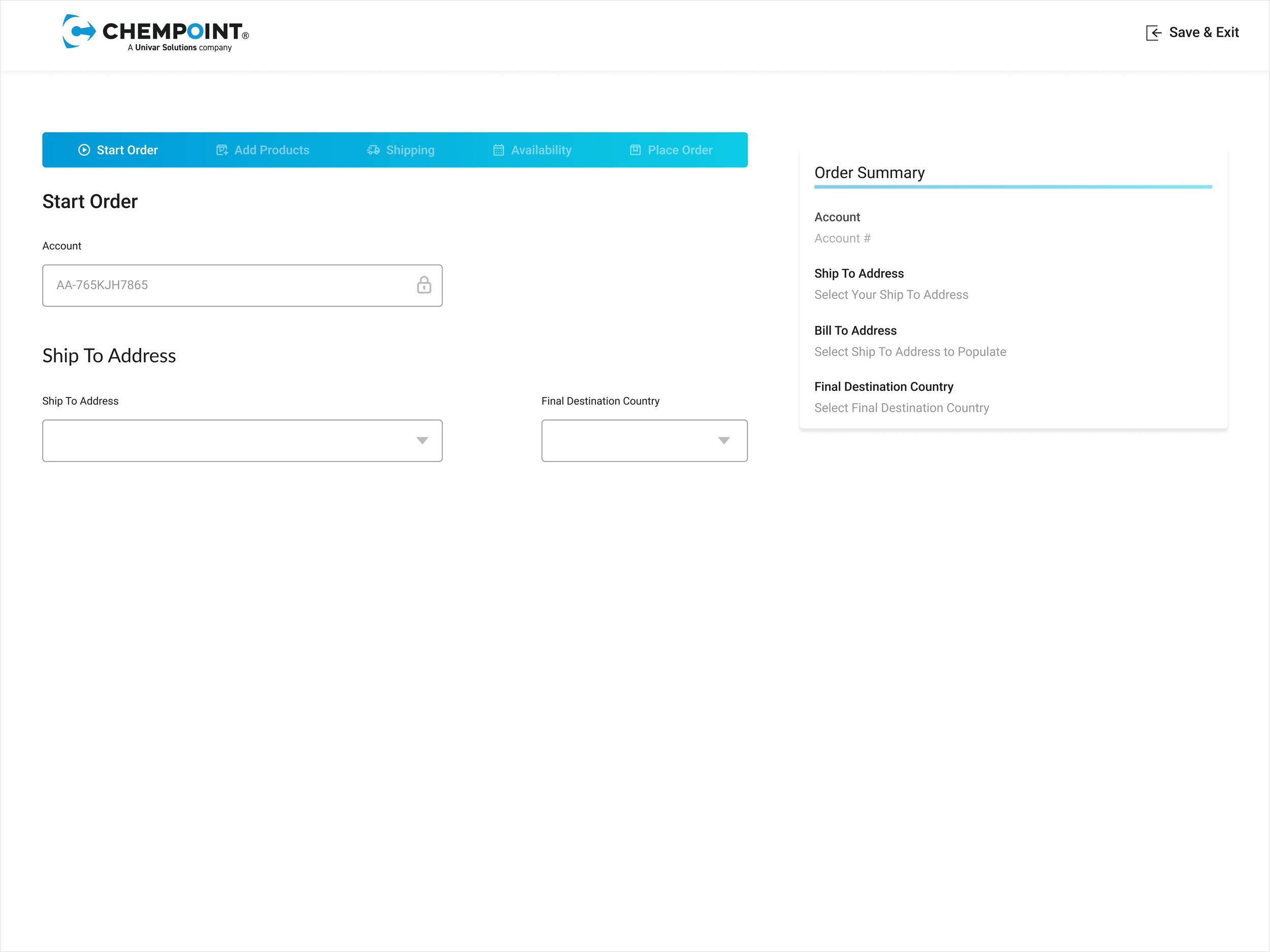
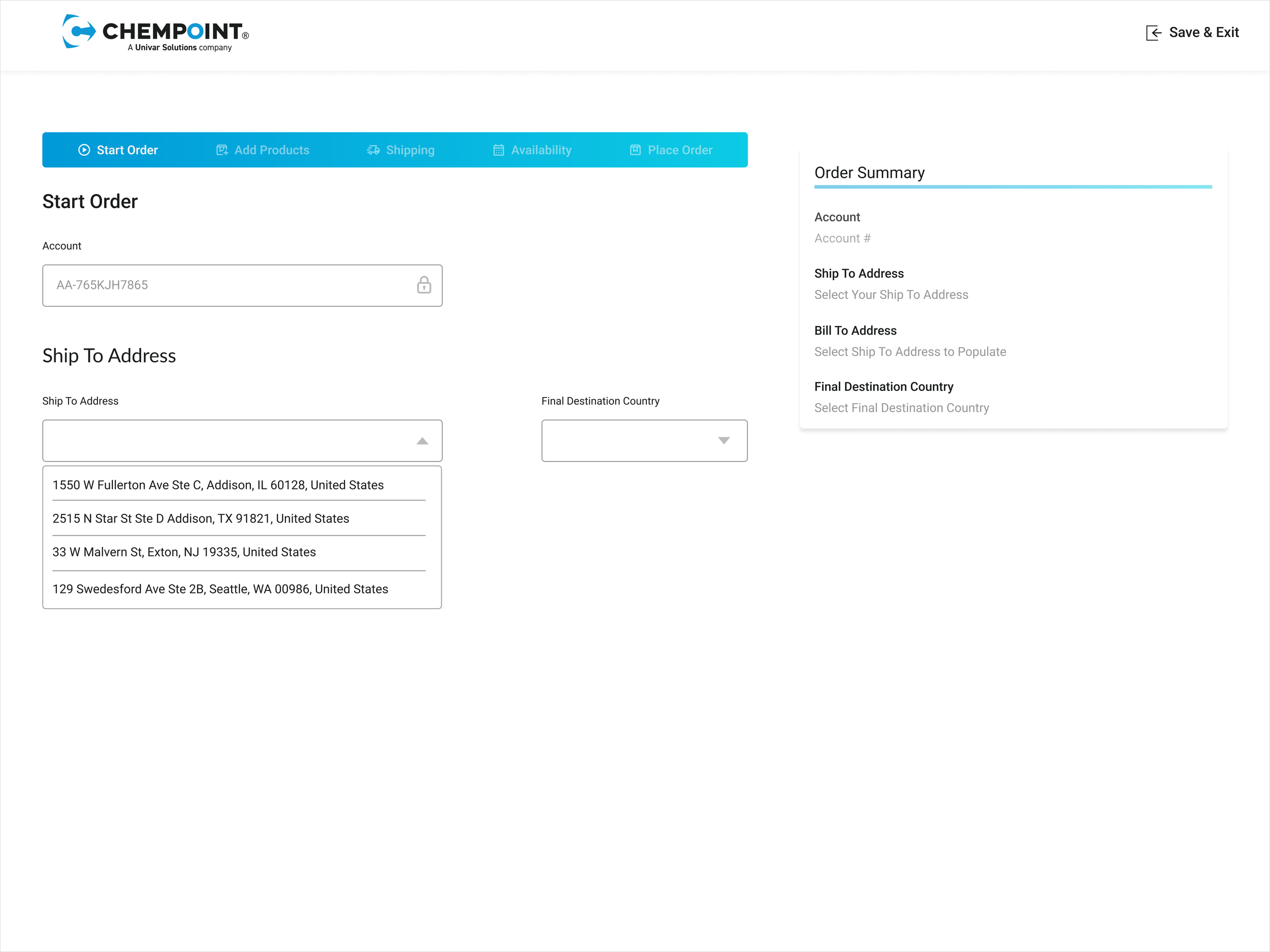
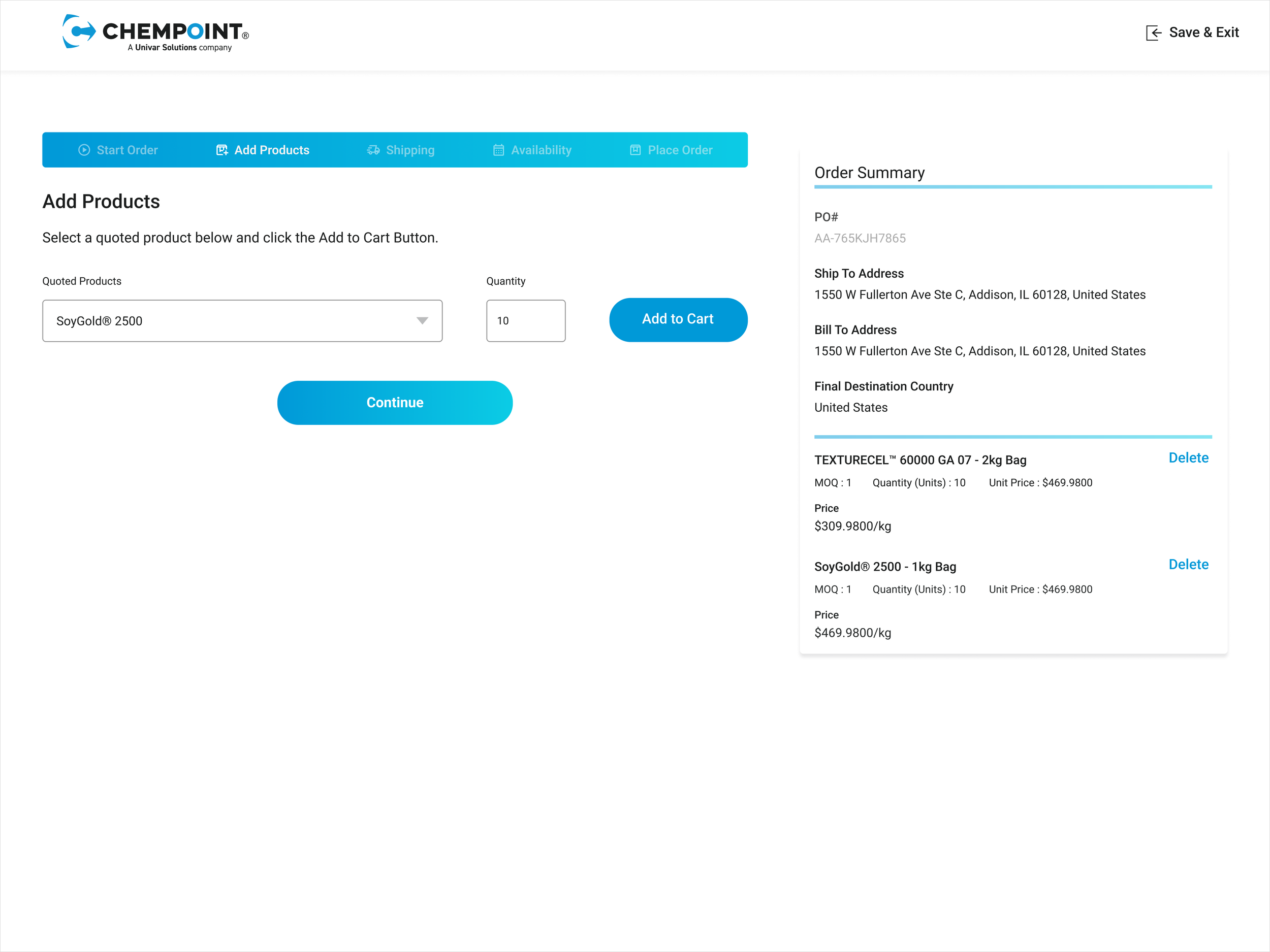
Checkout

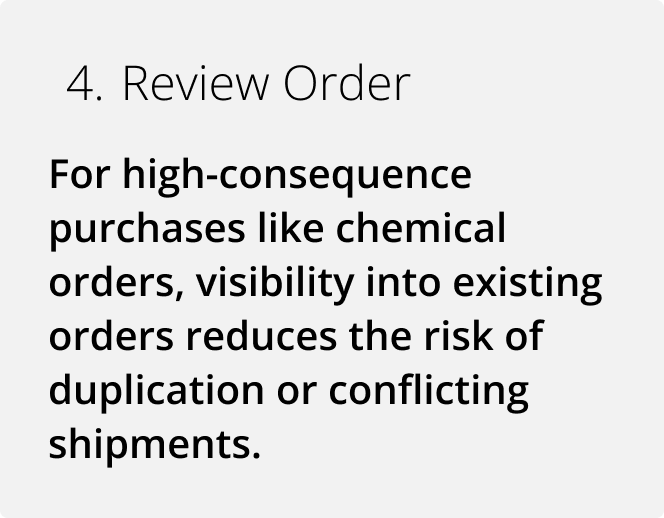
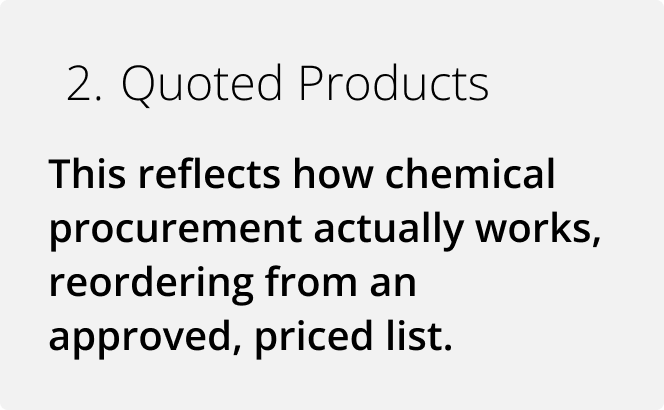
For a repeat buyer, checkout shouldn't feel like checkout; it should feel like confirmation. Every element on this screen is a digital equivalent of something the sales rep used to do verbally, confirming the product, the price, the quantity, and the details before committing. The design doesn't replace the rep's function; it internalizes it.
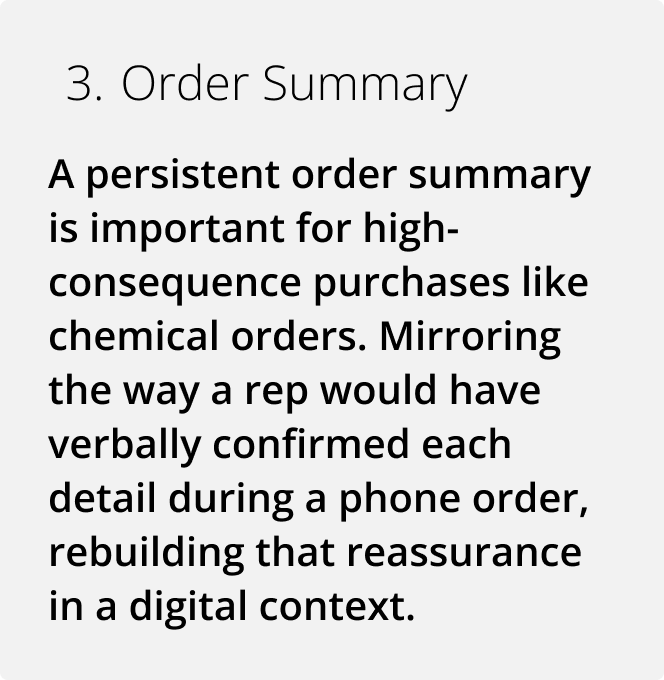
These four elements work together to make placing a familiar order fast while maintaining enough visibility that a buyer never has to second-guess what they're committing to.
Understanding The Customer
No research budget, but rich internal knowledge
Unfortunately, formal user research wasn't available for CHEMPOINT. Instead, I worked closely with the sales team, the people who spoke to our customer every single day. They were a direct line to real user behavior: what questions buyers asked most, where they got confused, and what they trusted.
I treated the sales team as a proxy research resource, conducting structured conversations to extract patterns from their collective customer knowledge. This gave me a working picture of the user.
The Core Challenge
Customers who don’t trust digital
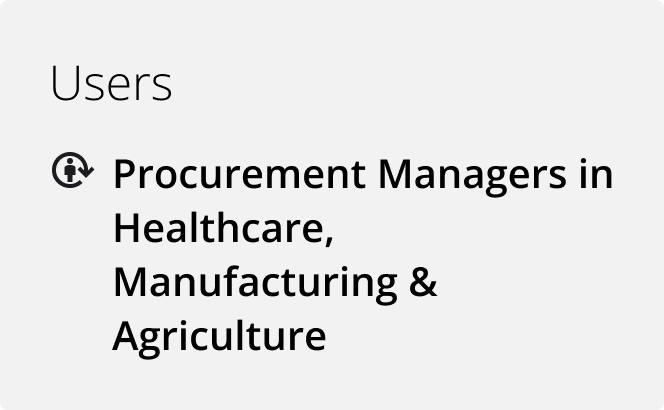
The hardest design problem on this project wasn't the compliance requirements and complicated workflows; it was the users themselves. Procurement managers in Manufacturing, Healthcare, and Agricultural environments are often experienced, domain-expert buyers who have been doing their jobs the same way for years. Their relationship with their sales rep wasn't just transactional; it was a relationship of trust built over time.
Asking them to place a chemical order through a website, without a human to confirm, verify, and advise, was a significant behavioral shift. The design had to do more than work. It had to feel safe.
Design Process
From brief to launch